Not Every Warm Dog Needs a Cooling Diet
Why cooling diets aren't always the answer to your dog's inflammatory condition.

Heat is an observation, not a diagnosis.
Warm ears, warm paws, panting, seeking cool floors…
These are observations that tell us a dog is feeling warm, but they don’t tell us why the dog is warm.
One of the most common things I see recommended in dog groups is to feed a cooling diet whenever a dog develops itchy skin, hot spots, ear infections, or other signs of Heat. Sometimes that advice is exactly right, the dog heals, and the owner never looks back.
For another dog though, that advice may not bring the same healing.
The challenge isn't recognizing that your dog feels warm. The challenge is understanding what their body is trying to accomplish.
What Do Cooling Foods Do?
In Traditional Chinese Medicine (TCM), cooling foods aren't simply foods that “lower temperature.”
Cooling foods often have physiological effects that are inward, descending, moistening, calming, heat-clearing, or detoxifying.
Those properties can be incredibly helpful for dogs whose bodies are genuinely overwhelmed by inflammation or whose fluids have become depleted.
For those dogs, cooling foods can provide tremendous relief.
But food therapy isn't just about reducing symptoms. It's about supporting the body's ability to heal, and healing is not a static process.
The Lesson My Dog Taught Me
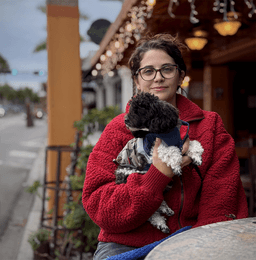
My own dog, Zeus, completely changed the way I think about cooling diets.
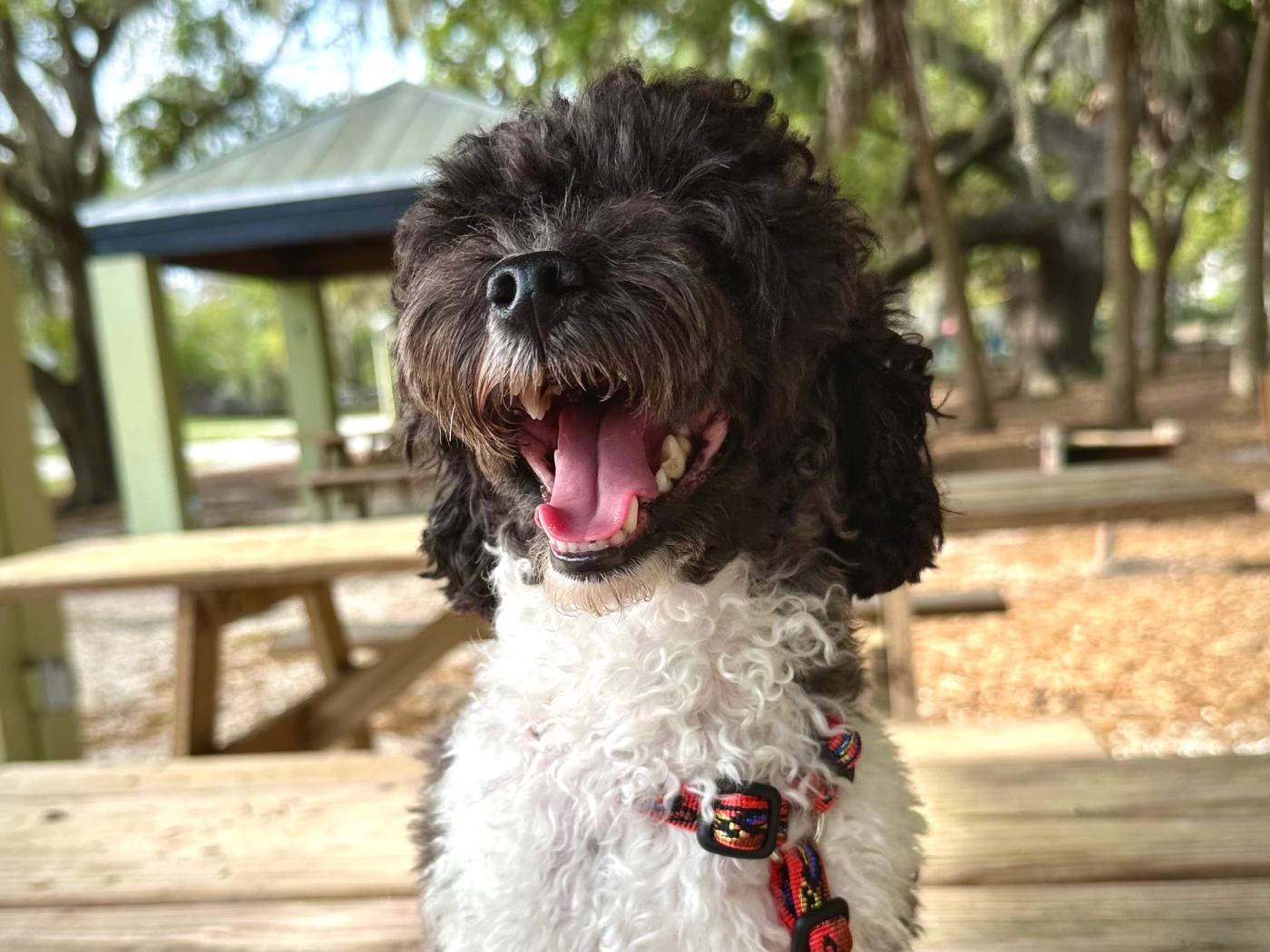
Zeus is a 6 pound poodle, with enough personality and energy for a dog ten times his size. If you met him, you would probably assume he was a dog that naturally "runs hot."
I certainly did, and whenever he developed signs of Heat, my reaction was to cool him down.
At first this seemed to work. Until it didn’t.
Whenever I leaned too heavily into cooling strategies, I noticed a shift in his personality. He became quieter, less confident, less expressive. His energy retreated inwards, and the strangest part was that he actually became warmer.
That was the moment I understood that his system wasn’t asking to be cooled. It was asking to be moved.
When I changed his meals to better support movement instead of simply trying to reduce Heat, his confidence returned, his personality opened back up, and many of the signs I had been trying to "cool" began to disappear.
Even though Zeus benefits from some cooling foods, he still needs enough movement to keep his digestion, circulation, and overall vitality functioning well.
When Heat Isn’t the Problem
One of the core principles of TCM is:
Same symptom. Different cause.
Two dogs can both have warm ears, seek cool floors, and develop red, irritated skin.
One may truly benefit from cooling foods. The other may not.
Sometimes the Heat itself is the problem. Other times, Heat develops because something deeper isn't moving as well as it should.
Imagine a traffic jam.
What happens?
- Engines idle
- Brakes heat up
- Exhaust builds
- Tempers flare
The traffic jam isn't the Heat. The Heat is what the traffic jam produces.
Heat is a consequence of poor movement.
Now, imagine turning off all the engines.
Sure, things become cooler, but nobody gets home.
The real solution wasn’t to cool, it was to restore movement.
Why This Matters
Cooling foods absolutely have an important place in food therapy.
There are dogs that genuinely need them, and for some of those dogs they remain an important part of their long-term nutritional plan.
The mistake is assuming that every warm dog needs perpetual cooling.
The body doesn't always ask for the same kind of support forever. As healing progresses, its needs often change.
A cooling diet may be exactly what helps calm an acute flare of inflammation, but once that inflammation begins to settle, the body may start asking for something different: stronger digestion, healthier circulation, better movement, or the nourishment needed to rebuild damaged tissues.
Food therapy should evolve as the pattern evolves.
If we focus only on reducing Heat without asking why the Heat is there, we risk treating the symptom instead of supporting the process that created it.
A Different Question to Ask
Instead of asking:
"What cooling food should I feed my warm dog?"
Try asking:
"Why is my dog warm in the first place?"
That single question can completely change the direction of a nutrition plan.
The goal of food therapy isn't simply to cool a warm dog. The goal is to give the body what it needs to restore balance.
Sometimes that means cooling. Sometimes that means nourishing. Sometimes, as Zeus taught me, it means helping the body move again.
If you are having a difficult time assessing what your dog is communicating, book a nutritional consultation and let’s work through it together --> https://www.dogfoodtherapy.com/consultations