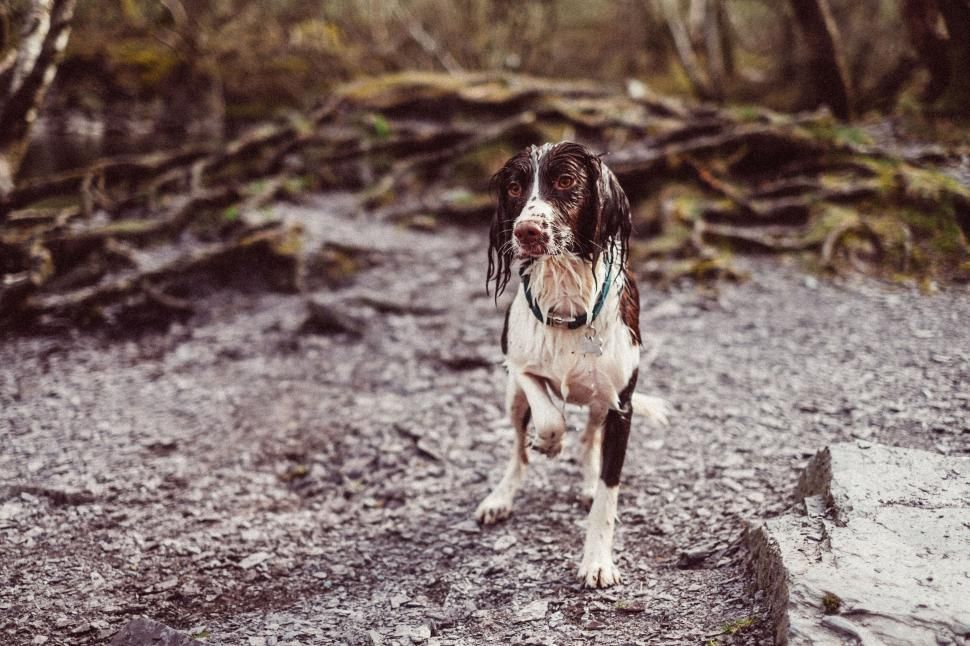
What is Dampness?
Dampness is one of the most common underlying patterns behind many chronic cases of allergies, gastrointestinal disorders, recurring infections, and even some behavioral changes in dogs.
In Traditional Chinese Medicine (TCM), Dampness develops when fluids are no longer being properly transformed, transported, or eliminated.
Instead of being utilized efficiently, moisture begins to accumulate and linger within the body.
In a healthy internal environment, moisture plays an essential role in your dog’s health. It nourishes tissues, transports nutrients, removes waste, regulates body temperature, provides lubrication, and supports healthy body function.
Dogs need moisture, but when fluid metabolism becomes impaired, that same moisture can begin to accumulate to a point where it no longer serves the body. Over time, this can slow normal physiological processes, interfere with circulation, and create an environment where other patterns of imbalance can develop.
The goal of treatment is not to eliminate moisture, but to restore the body’s ability to transform, transport, and regulate fluids efficiently.
How Dampness Develops
Dampness rarely appears overnight. It develops gradually as the body’s ability to transform, transport, or eliminate fluids becomes overwhelmed.
For some dogs, this process unfolds over months or years before obvious symptoms appear. Others may seem perfectly healthy until a stressful event, seasonal change, or dietary shift pushes them past their tipping point.
While every dog is unique, Dampness most commonly develops through one or more of the following pathways:
- Weak Digestion
When the digestive system struggles to efficiently transform food and fluids, moisture begins to accumulate. In TCM, this is most commonly associated with Spleen Qi Deficiency, but Liver and Kidney imbalances can also contribute.
- Excess Input
Even a healthy digestive system has its limits. Overfeeding, frequent treats, overly rich diets, or foods that are difficult for an individual dog to digest can exceed the body’s ability to process moisture.
- Environmental Factors
Living in hot, humid, or persistently damp climates can make it more difficult for the body to regulate moisture.
Characteristics of Dampness
Imagine you left a wet towel hanging outside. Days later, it’s still damp, heavy, and hasn’t completely dried. That lingering moisture is a good way to picture Dampness.
Just like that towel, Dampness is sticky, heavy, and difficult to resolve. It doesn’t move easily, which is why symptoms often become chronic and are slow to improve.
You might also notice that most of the moisture has settled toward the bottom of the towel. Dampness has a descending nature, meaning it sinks and accumulates in the lower parts of the body. This is one reason dogs with Dampness often develop problems affecting the lower limbs, bladder, reproductive tract, or digestive system.
If that towel remained wet long enough, it might even develop a musty smell. In TCM, Dampness is described as turbid. It creates an environment that can encourage overgrowth of yeast, bacteria, and other microorganisms.
Dampness is also obstructive. As moisture accumulates, it interferes with the normal movement of Qi, Blood, nutrients, and body fluids, slowing many of the body’s natural processes.
As Dampness builds, the body often attempts to eliminate excess moisture through its natural exit points. This is why signs of Dampness commonly appear as discharge, debris, or inflammation affecting the:
- Paws
- Ears
- Eyes
- Nose
- Perianal
- Genitals
When you think of Dampness, think of anything that is heavy, sticky, lingering, cloudy, and difficult to clear.
Signs of Dampness
Frito paws, cheesy eyes, fishy butt, foul breath. These are all things you can smell.
Odor = Dampness
Beyond odors, Dampness can also lodge itself into different areas of the body and produce different symptoms.
Digestive
- Poor or ravenous appetite
- Sluggish digestion
- Bloating
- Loose stools
- Mucus stools
- Regurgitation
- Bile vomit
- Microbiome imbalances
Skin
- Itching
- Excessive licking
- Greasy coat
- Yeast (rust colored fur staining)
- Oozy, weeping wounds
- Thickened skin
- Recurring infections
Whole Body
- Fatigue
- Sluggishness
- Mental fog
- Heavy limbs
- Joint discomfort
- Anxiety or excitement
- Irritability
- Restless sleep or Insomnia
No two dogs with Dampness look exactly the same.
One dog may have loose stools and fatigue, while another dog develops yeast infections and behavioral changes.
A dog’s constitution, age, diet, environment, activity level, whether the condition is acute or chronic, and the underlying pattern all influence how Dampness presents.
This is why two dogs can both have Dampness yet require very different treatment strategies.
Dampness Rarely Travels Alone
In TCM, patterns rarely exist in isolation. Dampness commonly combines with other internal or external patterns, creating different symptoms and requiring different treatment strategies.
Damp-Heat
Dogs that tend to run warm, consume excessive warming or drying foods, or live in hot, humid environments can develop Dampness alongside Heat. These dogs often have more inflammation, redness, odor, itching, and infections.
Damp-Cold
Dogs that tend to run cold, consume excessive cold or cooling foods, or live in cold, damp environments can develop Dampness alongside Cold. These dogs often appear slower, more lethargic, and may have loose stools and fluid retention.
Dampness with Qi Stagnation
Dampness can obstruct the normal movement of Qi, while stagnant Qi can also impair the body’s ability to transform and move fluids. Dogs that experience chronic stress, frustration, or inactivity are more prone to this combination.
Dampness and Phlegm
When Dampness persists over time, it can become more concentrated and transform into Phlegm. This represents a more substantial accumulation of pathological fluids within the body that may contribute to thick mucus, nodules, masses, lipomas, or cysts.
Identifying Dampness is only the first step.
To restore balance, you also need to understand what other patterns are present and which imbalance developed first.
Dampness Through a Modern Lens
There isn’t a direct Western diagnosis or equivalent for Dampness, but many of its concepts overlap with modern medicine.
Poor digestion, altered gut microbiota, biofilms, chronic low-grade inflammation, impaired lymphatic drainage, sluggish circulation, excess mucus production, obesity, and metabolic dysfunction can all contribute to or coexist with the pattern that TCM describes as Dampness.
Although Eastern and Western medicine use a different language and framework, they are often observing many of the same physiological changes from different perspectives.
How to Help Your Damp Dog
Always start with the basics.
- Excess Weight
Excess body fat is considered a form of Dampness. One of the first goals is helping your dog achieve and maintain a healthy body condition.
Your dog shouldn’t be too thin or overweight. You should be able to easily feel their ribs beneath a light layer of fat without the ribs protruding, and they should have a visible waist without prominent hip bones.
If your dog is already lean but continues to struggle with Dampness, then we look at what your dog is eating and determine if their diet is contributing to Dampness.
- Diet
Overfeeding, frequent treats, overly rich meals, highly processed foods, and even fresh foods that exceed your dog’s digestive capacity can all make it more difficult for their body to regulate moisture.
Some dogs may also struggle with excessive amounts of cold or frozen foods as these types of foods weaken digestive fire.
In my experience, many dogs with chronic Dampness benefit from incorporating more fresh, minimally processed foods into their diet.
If making a complete transition feels overwhelming, start small. Replacing just 10% of your dog’s daily food with fresh meat and vegetables as a topper is a simple place to begin. As your confidence grows, you can decide whether you’d like to take the next step. Small, sustainable changes often have the biggest impact over time.
How TCVM Food Therapy Can Help
One of the unique aspects of TCM is that foods are chosen not only for their nutrients, but also for how they influence the body’s internal environment.
Because Dampness develops gradually through digestion, metabolism, and fluid regulation, food becomes one of the most effective ways to influence those same processes every single day.
Rather than simply feeding calories, TCM uses food strategically to help restore balance from the inside out.
- Bitter foods help dry Dampness
- Bland foods encourage the elimination of excess moisture via urination
- Pungent foods promote movement and circulation
- Aromatic foods help transform Dampness and Phlegm
- Yang foods provide warmth and support digestion
- Yin foods help cool and nourish body fluids
Depending on the patterns contributing to your dog’s Dampness, a thoughtfully and carefully formulated diet can help restore healthy digestion, improve fluid metabolism, and gradually shift their body’s internal terrain toward a balanced state.
When dietary changes alone aren’t enough, Chinese herbal medicine can provide additional support.
Herbs are often used to reach deeper layers or more persistent patterns, helping the body transform, move, and eliminate Dampness while strengthening its resilience over time.
If you suspect Dampness is contributing to your dog’s health concerns but aren’t sure where to begin, I am here to help. Together, we can identify the patterns affecting your dog and create an individualized nutrition plan designed to guide your dog back to a state of harmony.
Book here → https://www.dogfoodtherapy.com/consultations